
Posted by: Manhattan LASIK Center
Many people assume that LASIK is the default option for anyone who wants to reduce dependency on glasses or contacts. In reality, there are many vision correction procedures that can provide you with greater visual freedom.
Before any procedure is recommended, surgeons at Manhattan LASIK Center perform a thorough pre-operative evaluation that measures several aspects of your eye anatomy. Corneal thickness is one of the most consequential measurements in that process, and it can directly influence which vision correction procedure is the right fit for you.
Why the Cornea Matters in Laser Vision Correction
The cornea is the clear, dome-shaped tissue at the front of your eye. Its primary job is to focus incoming light onto the retina, and refractive errors occur when the corneal shape does not direct light accurately. LASIK eye surgery corrects this by permanently reshaping the cornea using a laser. The three most common refractive errors LASIK addresses are:
- Myopia (nearsightedness) — the cornea is too steep, causing distant objects to appear blurry
- Hyperopia (farsightedness) — the cornea is too flat, making close-up focus difficult
- Astigmatism — an irregularly shaped cornea causes blurred or distorted vision at any distance
During LASIK, a thin flap is created in the outer layers of the cornea. The flap is lifted, and an excimer laser removes precise amounts of tissue from the stroma, the thickest middle layer. The flap is then repositioned over the treated area. Because the procedure requires both flap creation and tissue removal, there must be enough corneal tissue to accommodate both without compromising the structural integrity of the eye.
What Corneal Thickness Actually Means
Corneal thickness is measured in microns. The average cornea measures between 520 and 540 microns, though the natural range extends from roughly 470 to 630 microns. Your individual measurement matters because the amount of tissue a surgeon can safely remove is directly tied to how much is there to begin with.
At Manhattan LASIK Center, corneal thickness is evaluated using two key tools:
- Pentacam HR: generates a three-dimensional map of the anterior eye, capturing both the front and back surface of the cornea with the most accurate pachymetry measurements available
- Ultrasound pachymetry: provides a precise, direct measurement of corneal depth at multiple points
As part of what tests are done before LASIK, surgeons also calculate the projected “residual stromal bed,” which is the amount of tissue that will remain after the flap is created and the laser ablation is complete. That number must meet a safe minimum threshold for LASIK to proceed.
When Corneal Thickness Affects LASIK Candidacy
If corneal thickness falls below what is needed to safely create a flap and remove sufficient tissue, LASIK is not a good option.
This is not a judgment about your eyes being defective. It is simply a measurement that determines which surgical approach will produce the safest, most effective result.
For patients who do qualify for LASIK, the thickness of the flap itself also matters. At Manhattan LASIK Center, surgeons routinely create ultra-thin 80-micron corneal flaps using the ZEISS VisuMax FS500 laser. Compared to conventional LASIK flaps, which are around 100 microns, the 80-micron flap delivers several advantages:
- Preserves significantly more of the corneal stroma
- Leaves the cornea biomechanically stronger post-procedure
- Reduces the likelihood of post-operative dryness
- May expand candidacy for patients in the lower end of the normal thickness range
What Are the Options If LASIK Is Not the Right Fit?
Not qualifying for LASIK does not mean not qualifying for vision correction. Several strong alternatives exist, and your corneal measurements will help determine which one makes the most sense:
- ZEISS SMILE Pro – a flapless procedure that removes a small lenticule of tissue through a small incision, with no flap created. Because no flap is cut, SMILE Pro preserves more corneal biomechanical strength and frequently qualifies patients who fall short of the LASIK thickness threshold. Manhattan LASIK Center has performed over 20,000 SMILE procedures and is the nation’s most experienced ZEISS SMILE center.
- PRK/LASEK/Epi-LASIK – surface ablation procedures that remove the outermost epithelial layer rather than creating a flap, consuming no flap-related tissue. Recovery takes longer than LASIK or SMILE, but visual outcomes are comparable and the approach is well-suited to patients whose thickness limits flap creation.
- EVO ICL – an implantable collamer lens placed inside the eye without removing any corneal tissue. Because the cornea is not altered, corneal thickness is not a limiting factor, making EVO ICL an option even for patients who cannot undergo any form of ablative laser surgery.
“Getting Zeiss SMILE at Manhattan LASIK Center changed my life! I had very bad vision and astigmatism. Previously, I went to two other LASIK centers near my hometown but ended up not being a candidate for Traditional LASIK due to dry eyes. However, I was a candidate for the Zeiss SMILE procedure since it is suitable for those with dry eyes. After two decades of bad vision, I can finally see without glasses or contacts, all thanks to Dr. Buchsbaum and Manhattan LASIK Center!” — Manhattan LASIK Center SMILE Patient
What Your Evaluation Will Tell You
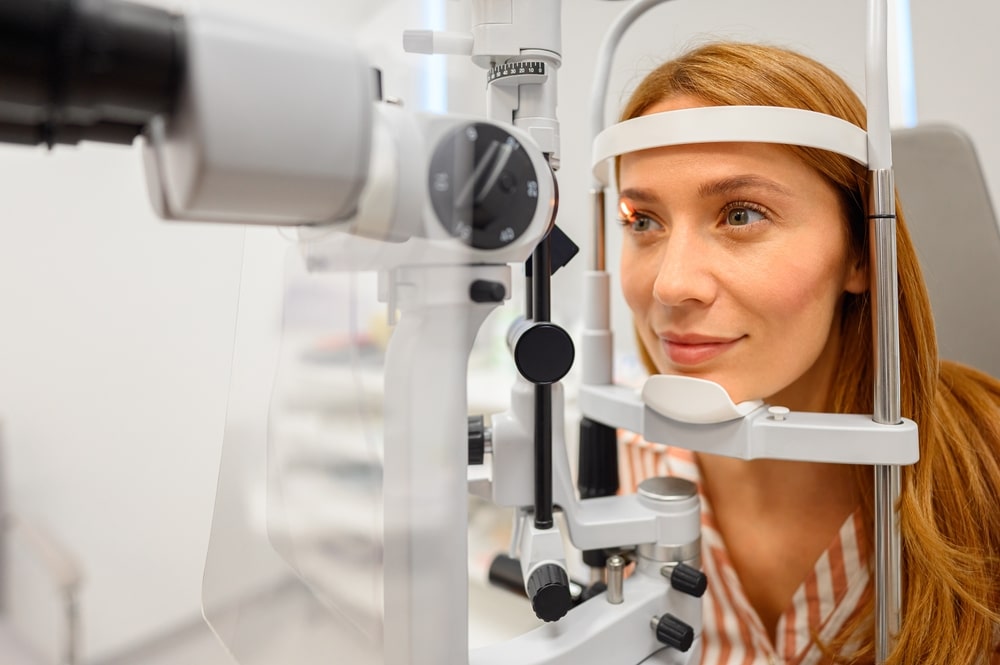
The only way to know for sure whether or not LASIK might be right for you is to have precise measurements taken by experienced surgeons using advanced diagnostic equipment. What the evaluation can tell you is exactly where you stand and which procedures are genuinely suited to your anatomy.
At Manhattan LASIK Center, Dr. Kevin Niksarli and the surgical team have performed over 100,000 successful laser vision correction procedures, with deep experience matching patients to the right procedure based on individual anatomy. The pre-operative assessment includes corneal topography, pachymetry, a full dilated exam, and more.
Corneal thickness is one data point in that picture, and for many patients, it opens the door to options they had not previously considered.
Wondering whether your corneal thickness makes you a candidate for LASIK or another vision correction procedure? Schedule a free virtual consultation at Manhattan LASIK Center in Manhattan, NY, today.