

Posted by: Manhattan LASIK Center
If you have been researching laser vision correction, you have probably noticed that SMILE and LASIK keep coming up together. They are both laser procedures, and both are highly effective. At Manhattan LASIK Center, SMILE is performed using the latest generation of the technology: ZEISS SMILE Pro.
So why would a surgeon recommend SMILE over LASIK for certain patients? The answer comes down to your eyes, not just your prescription. For a meaningful number of patients, SMILE can be the better clinical choice.
What Is the Difference Between SMILE and LASIK?

Both procedures correct nearsightedness and astigmatism by reshaping the cornea with a laser. The difference is in how the surgeon accesses the tissue.
With LASIK, the surgeon creates a thin flap on the surface of the cornea, lifts it, applies the laser underneath, and then repositions the flap. The flap heals in place but remains a permanent part of the eye’s structure.
ZEISS SMILE works differently. No flap is created. Instead, the laser creates a small, lens-shaped piece of tissue just beneath the corneal surface, which the surgeon removes through a tiny incision of about 2 to 4 millimeters. The outer surface of the cornea stays largely intact. That distinction, flap versus no flap, is what drives most of the clinical differences between the two procedures.
At Manhattan LASIK Center, SMILE is performed using ZEISS SMILE Pro, the most advanced version of the technology. Built on the VisuMax 800 platform, it completes the laser step in under 10 seconds per eye with AI-assisted alignment that allows surgeons to customize treatment parameters in real time. Manhattan LASIK Center is the first and only center in the NY Tri-State area to offer ZEISS SMILE Pro.
The surgeons at Manhattan LASIK Center can walk you through all available options and describe how SMILE and LASIK differ mechanically at your consultation.
Why Do Some Patients Not Qualify for LASIK?
LASIK is a well-established procedure, but it is not the right fit for every patient. During a comprehensive pre-procedure evaluation, surgeons assess a range of factors that can make LASIK less safe or less effective for certain eyes.
Common reasons a patient may not qualify for LASIK include:
- Corneal thickness below the required threshold for safe flap creation and tissue removal
- Pre-existing dry eye disease or a high risk of developing significant dry eye after surgery
- Corneal curvature irregularities that affect how the flap would be created or how the eye would respond
- High prescription levels that would require removing more tissue than the cornea can safely support
- Certain occupations or lifestyles where the presence of a corneal flap poses a long-term risk
Patients who have been told elsewhere that they are not LASIK candidates are sometimes surprised to learn they may still be candidates for SMILE.
Which Patients Are Better Suited for SMILE Than LASIK?
Patients with Thin Corneas
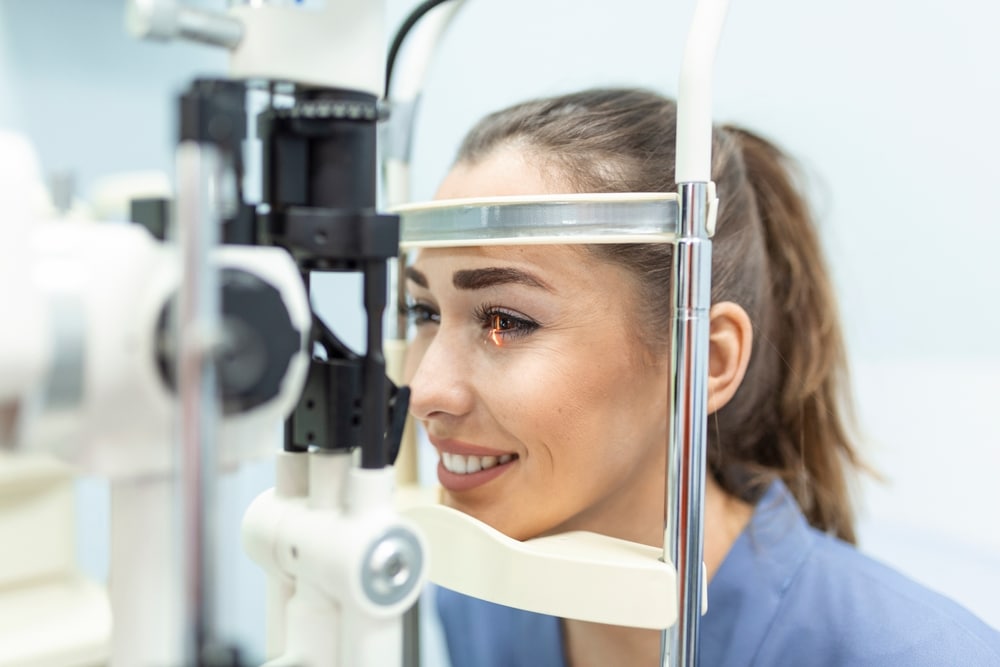
Creating a LASIK flap requires a certain minimum corneal thickness. If your cornea does not have enough tissue to support both the flap and the laser correction underneath it, LASIK is not safe.
SMILE does not create a flap, so it uses the corneal tissue more efficiently. Many patients who were told their cornea is too thin for LASIK turn out to be good candidates for SMILE after a full evaluation.
Patients with Dry Eyes or Dry Eye Risk
LASIK severs a significant number of corneal nerves when the flap is created. Those nerves play a role in triggering the eye’s natural tear production, which is why dry eye is one of the more commonly reported side effects after LASIK. SMILE’s small incision disrupts far fewer nerves, which means the eye’s tear function is better preserved after surgery.
Patients who are most likely to benefit from SMILE on this basis include:
- Those who already experience dry eye symptoms before surgery
- Contact lens wearers who have noticed increasing dryness or discomfort over time
- Patients who work in low-humidity environments, such as offices with heavy air conditioning
- Those who spend extended hours in front of screens
Patients with Active or High-Contact Lifestyles
Because LASIK creates a flap, that flap can theoretically be disrupted by a direct impact to the eye, even years after surgery. For most patients living everyday life, this is not a practical concern. For others, it is worth factoring in.
Patients who often do better with SMILE due to lifestyle factors include:
- Athletes who play contact sports such as basketball, martial arts, or boxing
- Military personnel or first responders whose roles involve physical risk
- Patients who participate in water sports or activities where eye protection is difficult to use consistently
- Anyone whose occupation involves a higher-than-average risk of facial or eye trauma
Why Many Patients Choose SMILE Even When They Qualify for Both
Some patients are good candidates for either procedure. When that is the case, many patients choose SMILE once they understand what it offers.
The cornea maintains more of its natural structural integrity without a flap. Biomechanically, this means the eye tends to be stronger after a flapless procedure than after LASIK. Recovery also tends to be smooth, with most patients returning to normal activity the following day.
Aileen, a SMILE patient at Manhattan LASIK Center, put it simply:
“As a new mom, wearing eyeglasses had been such an inconvenience. My friend told me about her SMILE experience and recommended me to do it as well. My experience has been great and easy. Manhattan LASIK Center offers same day surgery and everything took less than two hours!” –Aileen, SMILE Patient
What Happens During the SMILE Procedure?
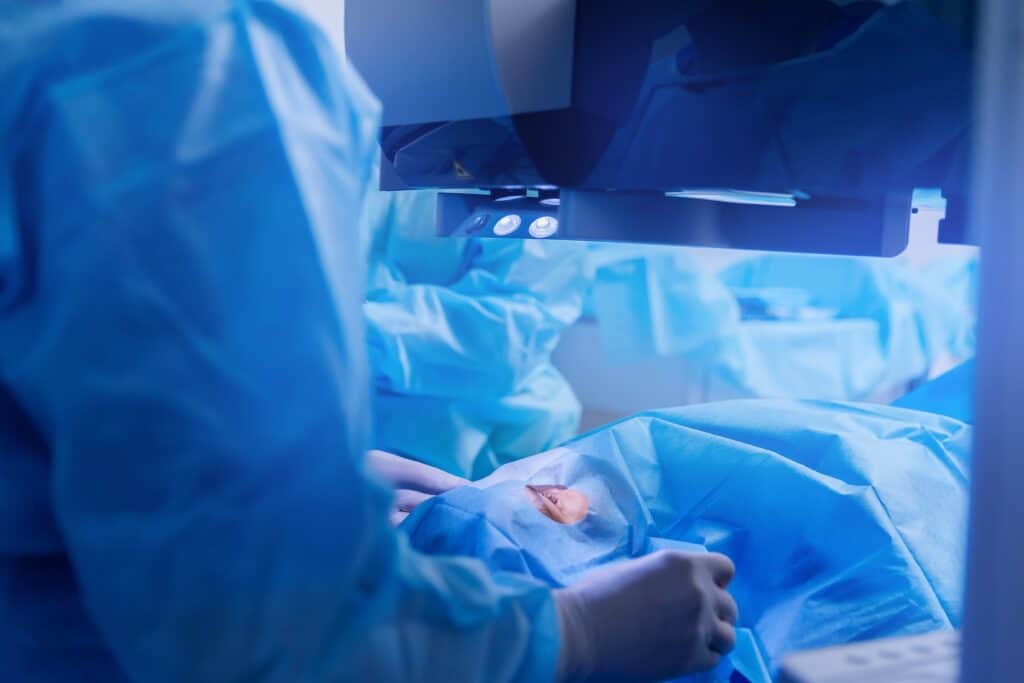
At Manhattan LASIK Center, SMILE is performed using ZEISS SMILE Pro, the most advanced generation of the technology. Compared to LASIK, ZEISS SMILE Pro offers:
- Under 10 seconds of laser time per eye, making the procedure faster and more comfortable than earlier generations
- AI-assisted alignment that allows surgeons to fine-tune treatment parameters in real time for a more personalized outcome
- No flap, no burning smell, no noise, with a recovery that fits around your schedule rather than disrupting it
- Strong long-term corneal integrity and fewer dry eye symptoms
Dr. Niksarli was the first surgeon on the East Coast to perform the original SMILE procedure, and Manhattan LASIK Center is now the first and only center in the NY Tri-State area to offer ZEISS SMILE Pro. That depth of experience with flapless vision correction is something very few centers can offer.
Curious whether SMILE is the right fit for your eyes? Schedule a complimentary appointment at Manhattan LASIK Center in Manhattan, NY, today.