
Posted by: Manhattan LASIK Center
If you are over 40 and still wear glasses or contacts for distance, you may wonder whether you have missed your window for laser vision correction. In many cases, you haven’t.
Many people in their 40s, 50s, and beyond are good candidates for LASIK eye surgery. Age does change one part of the conversation, though. At Manhattan LASIK Center, a leading practice focused only on refractive surgery, patients over 40 choose between two clear paths. Keep reading to learn the details of both.
Age 40 Is Not a Cutoff for LASIK
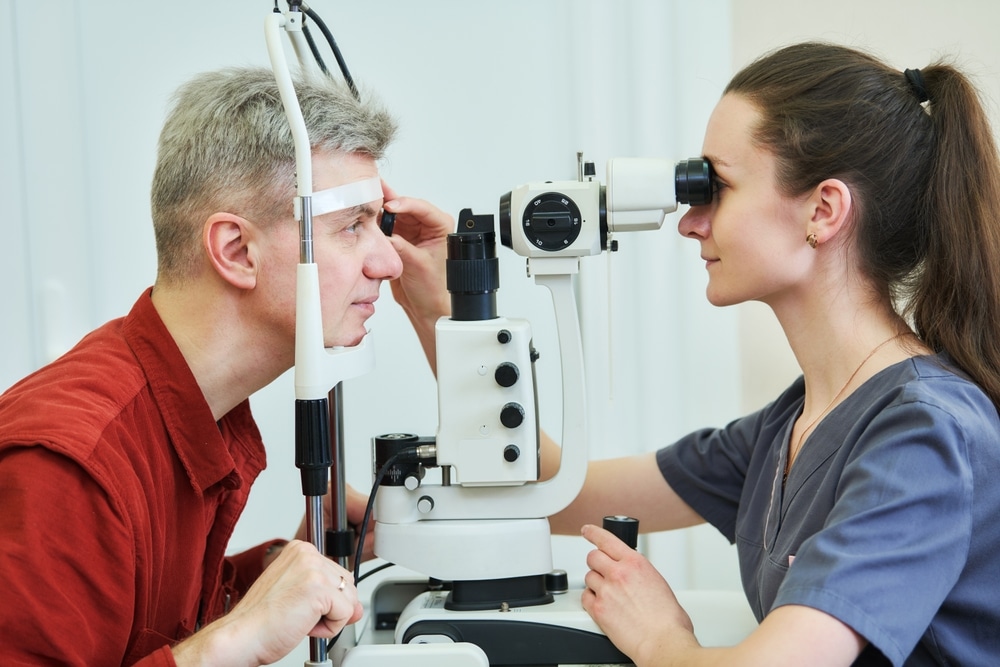
There is no upper age limit for LASIK. What matters is the health and stability of your eyes. Before recommending any treatment, our surgeons run detailed diagnostic testing to see whether laser vision correction is a safe fit for you.
These factors matter far more than your birthday.
- A stable prescription. Your glasses or contact lens prescription should not have changed much over the past year or two.
- Healthy corneas. Your corneas need enough thickness and a regular shape for the laser to reshape them safely.
- Good overall eye health. Conditions such as early cataracts, glaucoma, or severe dry eye may point toward a different approach.
- Realistic expectations. You should understand what laser vision correction can and cannot change about aging eyes.
That last point is where patients over 40 need a little more information.
What Changes in Your Eyes After 40

Around age 40, nearly everyone starts to develop presbyopia. The natural lens inside your eye gets stiffer and slowly loses its ability to shift focus from far to near. It happens to people who have never worn glasses, and it happens to people who had LASIK years ago.
LASIK reshapes the cornea, the clear front surface of the eye. It does not change the lens behind it, so it cannot stop presbyopia from developing.
Watch for these early signs:
- Holding your phone, books, or menus farther away to read them
- Needing brighter light for close-up tasks
- Eye strain or headaches after reading or computer work
- Small print that used to look sharp now looks blurry
Because presbyopia affects close vision, any plan for laser vision correction after 40 has to account for it.
Routes for Patients Over 40 at Manhattan LASIK Center
Most patients over 40 choose one of two approaches, and your surgeon will help you decide. Neither one is better in every case, the right choice depends on how you use your eyes every day.
Clear Distance Vision With Reading Glasses
With this approach, both eyes are corrected for distance. Many patients reach 20/20 distance vision or better, so you see clearly when driving, watching a game, or looking across a room. For menus, books, and phone screens, you use a pair of reading glasses.
This option tends to suit people who
- Drive often, especially at night
- Play sports or need sharp depth perception
- Want the crispest possible distance vision in both eyes
- Do not mind keeping readers nearby for close work
Monovision
Monovision corrects one eye for distance and leaves the other eye slightly nearsighted for near tasks. Your surgeon usually corrects your dominant eye for distance, and the other eye handles reading and phone use. Your brain learns to blend the two images, so you can see near and far without reaching for glasses.
Monovision can be a good option for people over 40 who want to avoid reading glasses, even if it means accepting a slight reduction in distance sharpness. Many patients have already worn monovision contact lenses and know they like it.
What to Expect With Monovision
Monovision works well for many people, but it takes some getting used to. Here is what patients can expect.
- An adjustment period. Your brain needs time to adapt to each eye having a different job. Many people settle in within a few weeks.
- Slightly softer distance vision. Your distance eye stays sharp, but overall distance clarity is a little lower than with both eyes corrected for distance.
- Occasional readers. You may still want glasses for long reading sessions or very fine print.
- Help for night driving. Some patients keep a light pair of distance glasses for the near eye to sharpen night driving.
Before surgery, your doctor may suggest trying monovision with contact lenses first. A short trial shows you how it feels in daily life before you commit.
Which Option Is Right for You?

The best choice comes down to your eyes, your work, and your hobbies. Here is a quick side-by-side look.
Full Distance Correction
- Sharpest distance vision in both eyes
- Reading glasses needed for close work
- Best for athletes, frequent drivers, and people with high distance demands
Monovision
- Near and far vision for most daily tasks without switching glasses
- A slight trade-off in distance sharpness
- Best for people who strongly prefer to skip readers
Either option can be done with more than one procedure.
“Having good eyesight is a blessing. It’s life-changing. The procedure took 10 minutes, and I felt absolutely nothing. Dr. Buchsbaum was extremely informative, down-to-earth, and explained the procedure every step of the way.” – Mathew F.
Many patients choose bladeless LASIK, while others are better suited for ZEISS SMILE, which works through a small incision instead of a corneal flap and can lower the risk of dry eye. Your consultation will show which procedure fits your corneas and your lifestyle.
Wondering whether monovision or full distance correction fits your life after 40? Schedule an appointment at Manhattan LASIK Center in Manhattan, NY, today.