
Posted by: Manhattan LASIK Center
When you research LASIK, how much have you read about the corneal flap? Most practices lead with the laser, but the flap, the thin layer your surgeon creates and lifts, has just as much to do with how safe your procedure is. Both its thickness and how it is made affect the strength of your cornea, your risk of dry eye, and how quickly you heal. Here is what thin-flap LASIK actually means and why it matters for your eyes.
What Makes a LASIK Flap “Thin”?
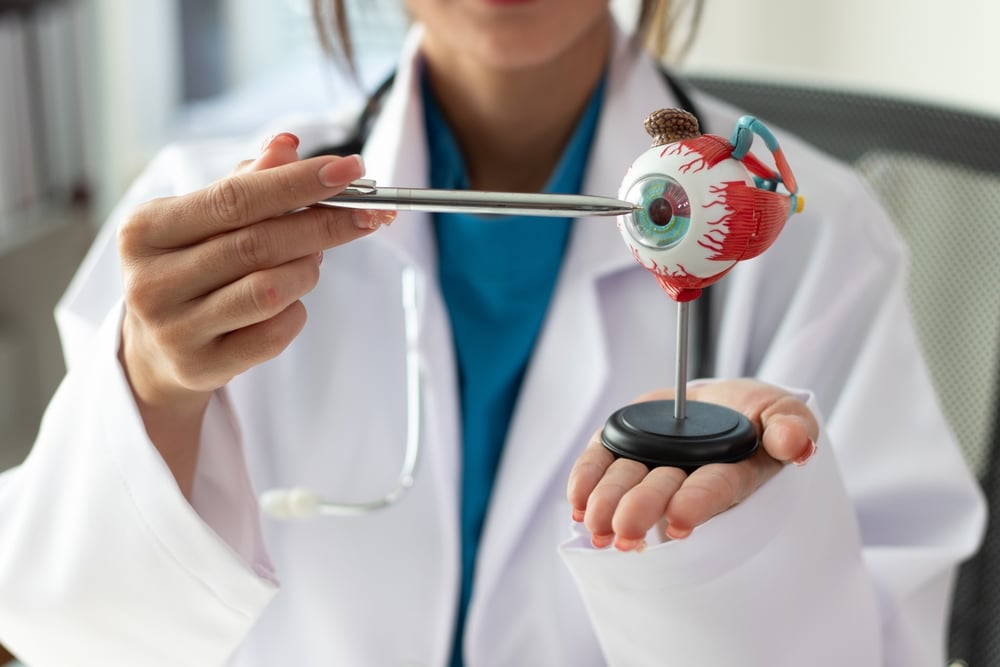
During LASIK eye surgery, your surgeon creates a thin, hinged flap on the surface of the cornea, lifts it, reshapes the tissue underneath with an excimer laser, and lays the flap back in place. The flap protects the treated area while your eye heals.
Flap thickness is measured in microns, and the difference between procedures is fairly significant:
- Traditional blade-created flaps: often 120 to 160 microns
- Typical bladeless LASIK flaps: around 100 to 120 microns
- Ultra-thin flaps at Manhattan LASIK Center: just 80 microns, the thinnest LASIK flaps in the world
Your cornea is only about 500 to 600 microns thick to begin with. Every micron used for the flap is a micron that cannot be used for vision correction or left behind as untouched structural tissue. A thinner flap simply leaves more of your cornea intact.
How the ZEISS VisuMax Creates an Ultra-Thin Flap Without a Blade
An 80-micron flap is only possible because no blade is involved.
As a leading refractive surgery practice, Manhattan LASIK Center performs Ultra–Thin Flap Bladeless LASIK using the ZEISS VisuMax femtosecond laser rather than the handheld mechanical device used in older, traditional LASIK.
Here is what happens during flap creation:
- A curved contact glass, sized to your eye’s anatomy, gently stabilizes the cornea. The curve matches the natural shape of your eye, so you feel far less pressure than with flat-surfaced lasers.
- The femtosecond laser moves through the cornea, creating a layer of microscopic bubbles at a precise, pre-programmed depth. This takes about 10 seconds per eye.
- Those bubbles define the flap, which your surgeon can then lift easily and smoothly.
The VisuMax uses roughly seven times less energy than other femtosecond lasers. Less energy means gentler treatment of delicate corneal tissue, and the computer-guided depth control produces a flap of consistent, predictable thickness from edge to edge. A blade simply cannot match that precision, which is why an 80-micron flap requires this technology.
Why a Thinner Flap is a Safer Flap

The safety case for a thinner flap comes down to what it preserves. Your cornea gives your eye its structure, and the nerves running through its surface layers control tear production and comfort. An ultra-thin flap disturbs less of both.
The practical benefits include:
- A stronger cornea. More untouched tissue remains beneath the flap, which supports long-term corneal stability.
- Less postoperative dryness. Fewer corneal nerves are cut during flap creation, so tear production recovers more easily. Dry eye is one of the most common LASIK complaints, and flap thickness plays a direct role in it.
- More precise visual outcomes. A uniform, predictable flap gives the excimer laser a consistent surface to work with.
- Faster healing. A thinner, smoother flap settles back into position quickly, and most patients return to normal activities the next day.
- More treatment room. Preserving tissue leaves a margin for your surgeon to fully correct your prescription safely.
None of this makes LASIK risk-free. No surgery is. But flap thickness is one of the few variables that shift the safety profile, and it is worth asking any practice you visit exactly how thick their flaps are.
“I had been contemplating corrective vision surgery for years. The procedure went so smoothly, and the entire staff made me feel so cared for. I felt so supported by Dr. Niksarli, Dr. Buchsbaum, and the incredibly kind, talented technicians and office staff. I am one week post-operation, and I can see nearly perfectly!” – Brian A., LASIK Patient
Does a Thin Flap Mean More People Qualify for LASIK?
Often, yes. Corneal thickness is one of the main reasons patients get turned away from LASIK. When a flap consumes 120 to 160 microns before treatment even begins, patients with corneas on the thinner side may not have enough tissue to correct their prescription safely. An 80-micron flap changes that math, and some patients told “no” elsewhere find they are candidates after all.
Candidacy still depends on several factors that only a full evaluation can measure:
- Corneal thickness and shape, mapped with high-resolution diagnostic imaging
- The size of your prescription and whether it has been stable for at least a year
- Eye health history, including conditions like glaucoma or corneal disease
- Age, and whether you are currently pregnant or nursing
For eyes that still are not suited to a flap of any thickness, flapless options exist.
ZEISS SMILE corrects vision through a small incision with no flap at all, which keeps the cornea even stronger and further reduces dry eye risk.
PRK reshapes the corneal surface directly and works well for thinner corneas.
The right procedure is the one that fits your specific eyes, which is why comprehensive testing comes before any recommendation at Manhattan LASIK Center.
Experience Matters as Much as Technology

The thinnest flap in the world still needs an experienced hand behind it. The surgeons at Manhattan LASIK Center have collectively performed more than 100,000 laser vision correction procedures over 25 years, and Dr. Kevin Niksarli has personally performed more than 80,000 of them. Combined with detailed corneal mapping before every procedure, that level of experience is what makes flap thickness go from a talking point to a real safety advantage.
If your eyes would be better served by SMILE, PRK, or another approach entirely, you will hear that honestly, because every treatment plan is tailored to the individual patient.
Want to learn how ultra-thin flap technology can protect your eyes? Schedule an appointment at Manhattan LASIK Center in Manhattan, NY for an in-person evaluation with optional same-day surgery. It all starts with a quick, complimentary phone consultation that you can schedule here.